Wood Textures for Web Design
Browse 20 free seamless wood textures optimized for Web Design. Every texture downloads as PNG at 1024px, 2048px, or 4096px — power-of-two sizes that Web Design handles efficiently with mipmapping and texture compression. All textures tile perfectly with no visible seams.
Wood textures — wood grain and bark — are among the most versatile materials in 3D, covering everything from floorboards and furniture to forest environments and structural elements. For web design, reference the PNG as a CSS background-image with background-repeat: repeat — the seamless edges guarantee a clean, continuous texture across any container size. All textures are procedurally generated and released under our royalty-free license — free for personal and commercial projects with no attribution required.
Wood Textures


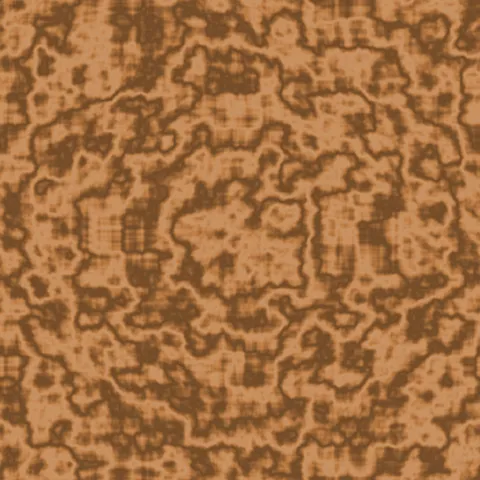
Workflow in Web Design
For web backgrounds, use CSS background-image with background-repeat: repeat to tile the texture across an element. For large hero sections, consider background-size: cover with a single high-resolution texture — repeating small textures can look dated on wide screens. Compress to WebP for 30 to 50 per cent smaller file sizes with no visible quality loss; the format is now supported in every modern browser. For retina displays, serve textures at 2x intrinsic size and scale down via CSS — this preserves crispness without forcing a 4K texture on every visitor.
Quality notes for wood textures
Wood textures carry visible directionality — the grain must run with the wood's implied length axis. Cross-grain application to a board-shaped surface reads immediately wrong. For flooring, rotate successive planks 180 degrees to avoid pattern alignment across the whole surface. For finished wood (polished table, varnished panel), pair the colour map with a very low roughness value; for raw wood (rough-sawn, weathered), roughness should stay high. Knots and grain irregularities read as quality signals — uniform wood looks artificial.
Web Design × Wood specifics
Wood grain CSS backgrounds work well with background-repeat: repeat-x for horizontal plank surfaces (wooden floor sections, table backgrounds) or repeat-y for vertical panelling. Align the grain direction with the layout's primary axis of content flow. For retina displays, serve the 2K version via a media query targeting (min-resolution: 2dppx).